Sign up Here for Adults’ and Youth Aikido Programs

Liminal Arts Dojo (Adults & 15+)
Martial Play • Somatic Intelligence • Embodied Conflict Resolution
The Liminal Arts Dojo offers movement-based martial arts practices for children, youth, adults, and families. Rooted in martial play, these classes cultivate somatic intelligence, nervous system resilience, and skillful ways of meeting challenge—without aggression or force.
Informed by Aikido, jiu-jitsu, and Systema, the Dojo emphasizes relationship, adaptability, and embodied awareness, supporting confident movement and grounded presence in everyday life.
You will develop:
Grounded posture, balance, and coordination
Nervous system resilience under pressure
Clear physical boundaries and partner awareness
Confidence in responding to challenge and conflict
Transferable skills for daily life
No prior martial arts experience required.
Adult Classes are Mondays and Wednesdays 5:30-7pm and Sundays 9-10am
Drop in rate is $30 per class or join a series. RSVP necessary when first joining the dojo.
We offer discounted rates for partners/spouses. You are responsible for purchasing your own Gi. We have some available for $50 or you can purchase a white cotton Aikido or Judo Gi online.
Cost: $110 for 4 weeks of classes
Drop in: $30
Pay via Venmo @Liminal_Arts or by check in person
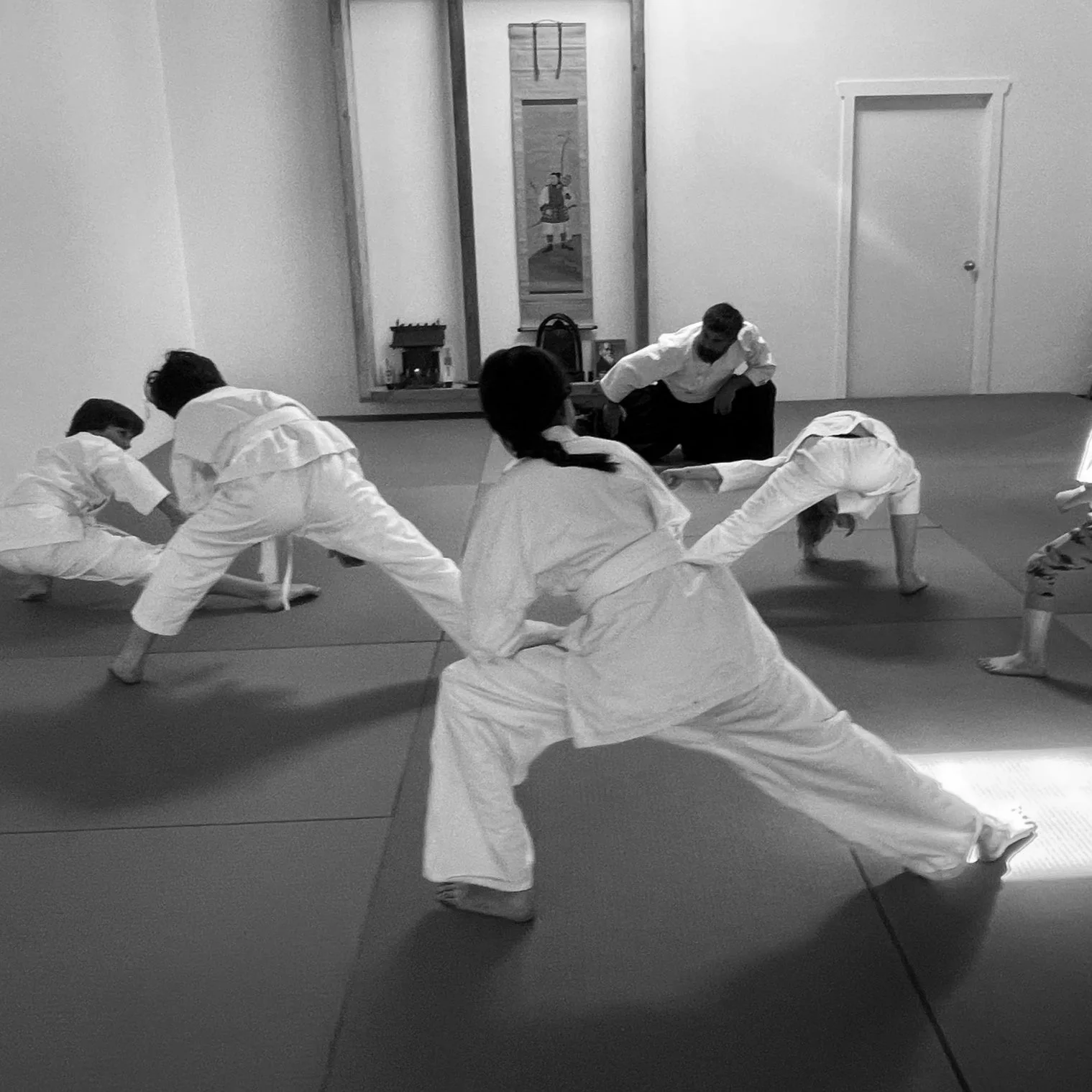
Youth Dojo (Ages 11-14)
Embodied Conflict Resolution Through Martial Play
Designed for the developmental threshold of early adolescence, this class supports youth in cultivating somatic intelligence and self-trust during a time of rapid physical, emotional, and social change. Through martial play and partner-based movement, students explore embodied conflict resolution—learning how to meet intensity, opposition, and uncertainty with awareness and adaptability rather than force or collapse.
Youth will develop:
Grounded posture, balance, and coordination
Nervous system resilience under pressure
Clear physical boundaries and partner awareness
Confidence in responding to challenge and conflict
Transferable skills for sports, relationships, and daily life
Youth Classes are Thursdays 4-5pm
Drop in rate is $30 per class or join a series.
We offer discounted rates for siblings. You are responsible for purchasing your own Gi. A Gi is required for Youth after your first series. We have some available for $35 or you can purchase a white cotton Aikido or Judo Gi online.
Next Series:
TBD, email with interest
Cost: $110 for series of 4
Drop in: $30
Pay via Venmo @Liminal_Arts or by check in person
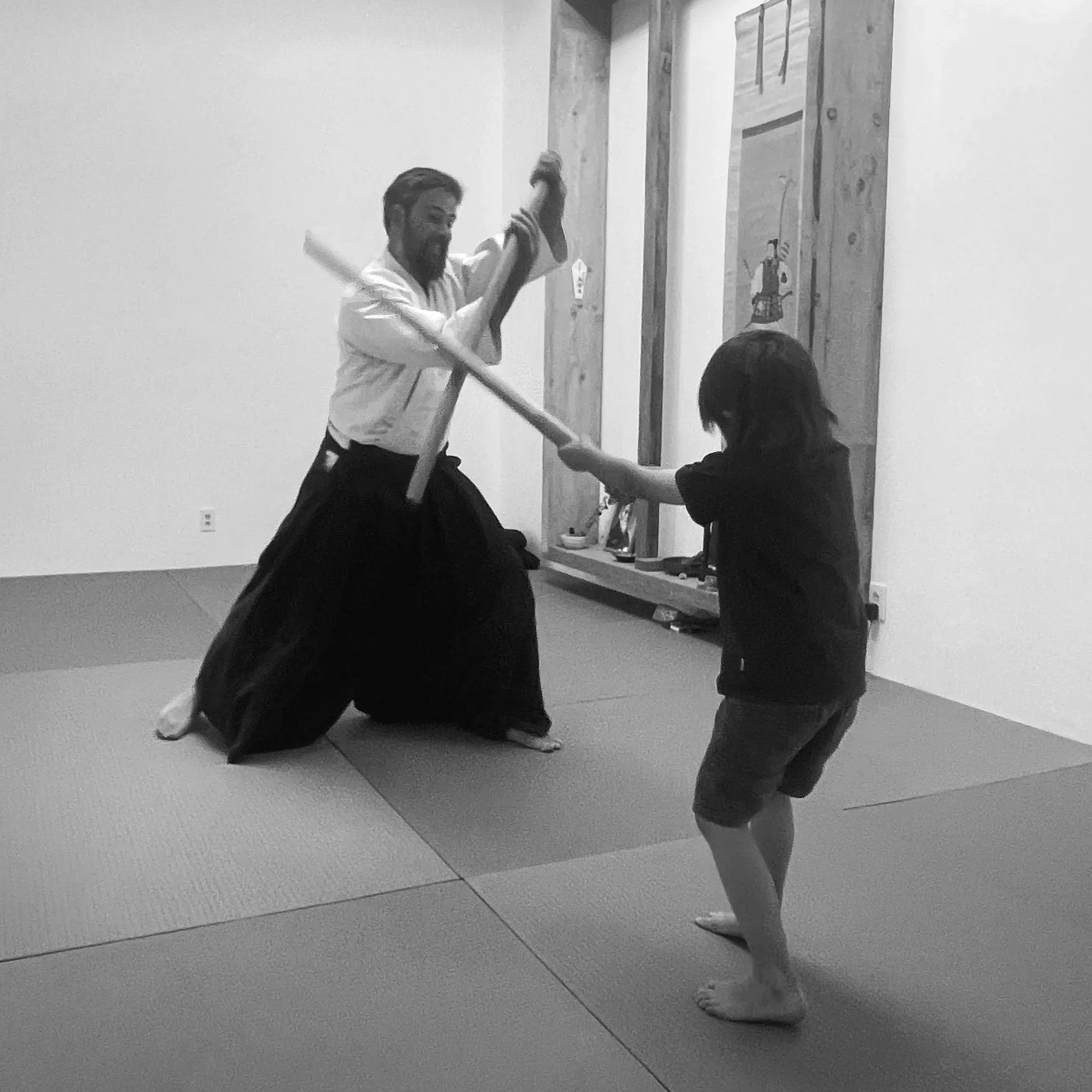
Kids’ Dojo (Ages 6–10)
Martial Play for Somatic Intelligence
This class builds somatic intelligence through martial play—using games, imaginative movement, and structured partner activities to help children develop coordination, confidence, and emotional regulation. Rather than emphasizing competition or aggression, kids learn how to move with others safely, respond to challenge with creativity, and build resilience through play. The focus is on curiosity, cooperation, and embodied learning that supports both physical and social development.
Kids will develop:
Balance, coordination, and strength
Body awareness and spatial awareness
Emotional regulation through movement
Respectful physical interaction and cooperation
Confidence in meeting challenge without force
Kids’ Classes are Tuesdays 4-5pm
Drop in rate is $30 per class or join a series.
We offer discounted rates for siblings.
An aikido Gi is preferred, but play clothes with long sleeves and long pants are allowed as well. You are responsible for purchasing your own Gi. You can purchase a white cotton Aikido or Judo Gi online.
Next Series:
Feb 10, 17, 24 & March 3, 10 & 17
Cost: $165 for series of 6
Drop in: $30
Pay via Venmo @Liminal_Arts or by cash or check in person
Please note…
Classes can be attended as drop in for a $30 daily mat fee (you must RSVP before joining).
Drop in fees must be paid in cash or Venmo @Liminal_Arts at the time of attendance.
Please be sure to familiarize yourself with dojo etiquette (below) before attending class. By signing up you agree to the terms & conditions.
*If dojo fees are a financial hardship, please reach out for partial work-trade scholarship opportunities.
Current Dojo Offerings
Liminal Movement Arts
with Ryan Miller Wolf

Kind words about Ryan’s teaching:
“Spiritual antidotes are sold everywhere, coaxing us out of the present—and therefore our bodies—with promises of attainment, tolerable futures and other such things that sparkle. It isn’t Ryan’s mastery… but rather his lived capacity and willingness of heart to stay with trouble, tension and mystery, whether individual or collective, in stasis or motion… that I trust him to cultivate space for true practice and guide us to embody it.” — Paul, artist
-
Ryan Miller Wolf has over 27 years of experience in martial arts, movement therapies, and healing arts. A committed seeker of freedom in body, mind, and spirit, his work integrates disciplined training with relational and community-centered practice.
Born to an Indonesian immigrant mother and a European-American father, and raised while traveling with his missionary family, Ryan considers himself a “third culture kid”—at home everywhere and nowhere. This liminal orientation has shaped his lifelong impulse toward integration rather than exclusion, and his deep sense of the interconnectedness of all things.
Ryan began formal martial arts training at Kannagara Aikido Dojo in Washington State in 1997. In 2004, he entered an apprentice residency with Koichi Barrish at Tsubaki Grand Shrine in Japan, undertaking two years of intensive study in Aikido and Shinto, including daily Misogi (cold-water purification), ritual practice, and ceremonial architecture. These experiences clarified for him the communal and relational heart of Aikido, which remains central to his work.
In 2006, Ryan began training in Systema, finding in it a complementary exploration of freedom of movement and non-hierarchical learning. He studied with Kaizen Taki and Brian King and began teaching Systema in 2010 with permission from chief instructor Vladimir Vassiliev.
Alongside martial arts, Ryan has practiced shamanic healing for over nine years and offers Reiki, assisted myofascial stretching (Rossiter System), and hive-based healing practices. He is also an avid beekeeper who creates medicinal remedies from the hive.
For a decade, Ryan and Nico co-founded and stewarded Golden Well Sanctuary in Vermont, where they farmed land, hosted retreats, taught seminars, fed thousands, and raised their children at the intersection of Spirit, Nature, Community, and Self. Following the pandemic, they co-founded the School of Liminal Arts and now call O’ga P’Ogeh (Santa Fe, NM) home.
Today, Ryan’s work is devoted to the materia of relationship—repairing and reconnecting the threads between self, community, and the living world, not to make all things the same, but to honor their shared weave.
-
Martial Play • Somatic Intelligence • Embodied Conflict Resolution
The Liminal Arts Dojo offers movement-based martial arts practices for children, youth, adults, and families. Rooted in martial play, these classes cultivate somatic intelligence, nervous system resilience, and skillful ways of meeting challenge—without aggression or force.
Informed by Aikido, jiu-jitsu, and Systema, the Dojo emphasizes relationship, adaptability, and embodied awareness, supporting confident movement and grounded presence in everyday life.
No prior martial arts experience required.
-
Martial Play for Somatic Intelligence
This class builds somatic intelligence through martial play—using games, imaginative movement, and structured partner activities to help children develop coordination, confidence, and emotional regulation. Rather than emphasizing competition or aggression, kids learn how to move with others safely, respond to challenge with creativity, and build resilience through play. The focus is on curiosity, cooperation, and embodied learning that supports both physical and social development.
Kids will develop:
Balance, coordination, and strength
Body awareness and spatial awareness
Emotional regulation through movement
Respectful physical interaction and cooperation
Confidence in meeting challenge without force
Classes are Tuesdays 4-5pm at SOLA Dojo.
See our sign up page for upcoming intro classes and ongoing series.
-
Embodied Conflict Resolution Through Martial Play
Designed for the developmental threshold of early adolescence, this class supports youth in cultivating somatic intelligence and self-trust during a time of rapid physical, emotional, and social change. Through martial play and partner-based movement, students explore embodied conflict resolution—learning how to meet intensity, opposition, and uncertainty with awareness and adaptability rather than force or collapse.
Youth will develop:
Grounded posture, balance, and coordination
Nervous system resilience under pressure
Clear physical boundaries and partner awareness
Confidence in responding to challenge and conflict
Transferable skills for sports, relationships, and daily life
Classes are Thursdays 4-5pm at SOLA Dojo.
See our sign up page for info on intro classes and ongoing series.
-
Martial Play for Connection, Coordination & Care
Family Dojo is a monthly gathering where children and their grown-ups practice martial play together—exploring movement, balance, and connection through games and partner exercises designed for mixed ages. This class offers a shared somatic experience that builds somatic intelligence, trust, and mutual awareness, supporting families in learning how to meet challenge, energy, and difference with curiosity rather than force.
Rather than instruction or correction, Family Dojo emphasizes listening through the body, cooperative play, and embodied communication—creating a space where families can move, laugh, and learn together.
Families will explore:
Play-based movement for all ages
Balance, coordination, and safe physical contact
Embodied communication and cooperation
Nervous system regulation through shared play
Meeting intensity and difference with curiosity and care
Who it’s for:
Children ages 6–14 and their caregivers. No martial arts experience required.See our sign up page and calendar for upcoming dates.
-
Silent seated meditation. Simplicity and presence.
Class Times:
Tuesdays & Thursdays:
Zazen 6:30-7pmWednesday & Fridays:
Zazen 7-7:30 amSundays:
Zazen 8:30-9:00 am
Drop in $20 suggested donation or included in Aikido practice fees.
Bow upon entering and leaving the practice area of the dojo.
Bow when stepping on or off the mat in the direction of the Kamiza and the picture of the founder O’ Sensei.
Respect your training tools: Your practice uniform, (gi) should be cleaned and mended. Do not forgo washing your gi after more than two practices; weapons should be in good condition and in their proper place when not in use.
Class is open and closed with a ceremony; it is important to participate in this ceremony, but if you are unavoidably late, you should be seated beside the mat until Sensei signals for you to join the class. Bow as you get on the mat. It is important that you do not disrupt the class in doing so.
The proper way to sit on the mat is in seiza. If you have a knee injury, you may sit cross-legged, but never sit with legs outstretched or lean against walls or posts. You must be alert at all times.
Do not leave the mat during practice without first asking for the instructor’s permission.
You should sit quietly and attentively in seiza when the instructor demonstrates a technique during class. After the demonstration, bow to Sensei and then to a partner and begin practice.
When the end of a technique is signaled, stop immediately, bow to your partner, and line up with the other students.
Never stand around idly on the mat; you should be practicing or waiting your turn.
When receiving personal instruction during class, sit in seiza and watch. Bow to the instructor when she/he has finished.
When the instructor is instructing another student, you may stop your practice and watch. Sit formally and bow to her/him when he is finished.
If you know the technique being studied and you are working with someone who does not, you may lead the person through it, but do not assume the role of the instructor. You are here for practice; do not force your ideas on others. At the same time, respect those more experienced.
It is everyone’s responsibility to keep the dojo clean; the practice area should be kept clean and the mat swept and wiped after each class.
There should be no eating, drinking, smoking, or gum chewing on the mat at any time.
No jewelry should be worn during practice.
If you are unsure of what to do in a particular situation ask a senior student or simply follow her/his lead. Although at first there will be many forms of etiquette to remember, they will become natural as you continue to train. Please do not be resentful if you are corrected on a point of etiquette.
Always train within the ability of your partner. Do not practice so as to injure your partner. You are both responsible for each other.
Please be aware at all times of those around you as you take ukemi (falling), or are throwing your partner. Train to develop awareness in all directions.
Visitors are welcome to sit and observe a class at any time, but the following rules of etiquette should be followed:
Sit quietly and respectfully.
No eating, drinking, smoking or cellphone use while class is in progress.
Do not talk or walk around while the instructor is demonstrating.
Dojo Etiquette
